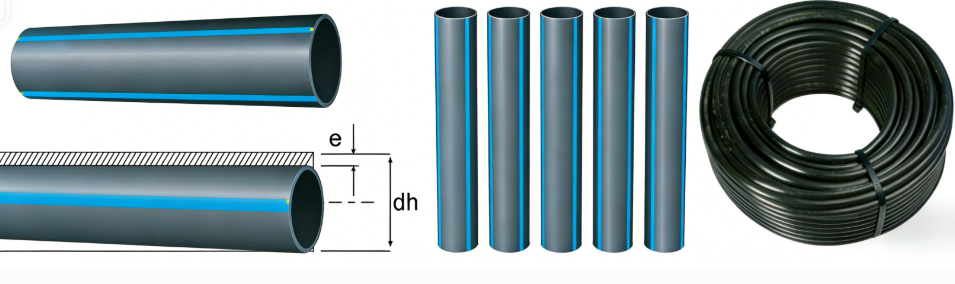
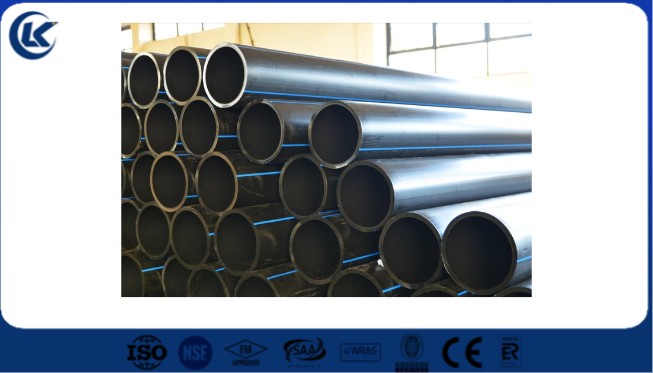
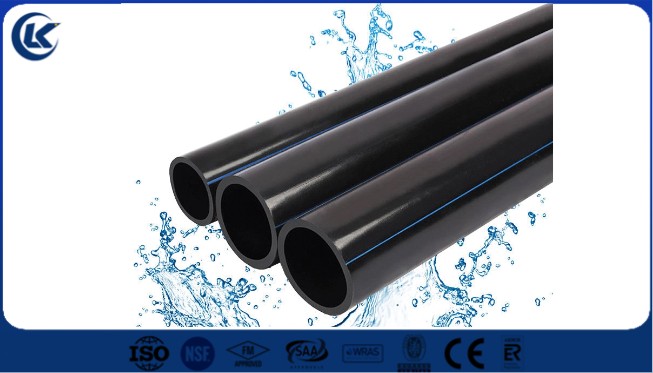
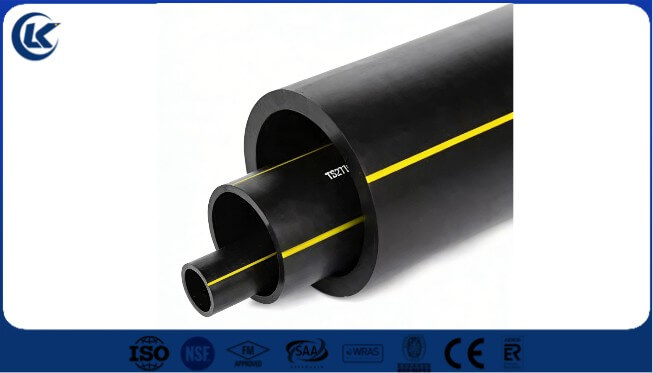
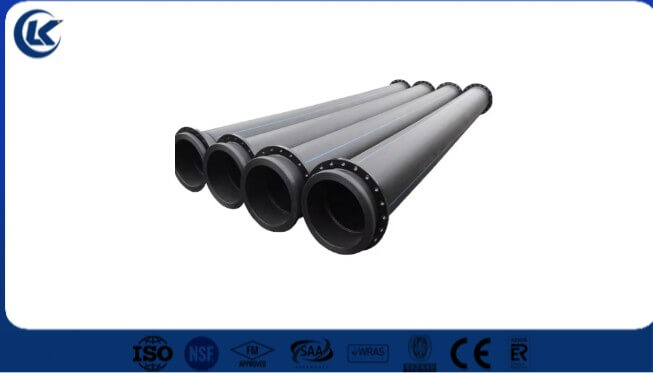
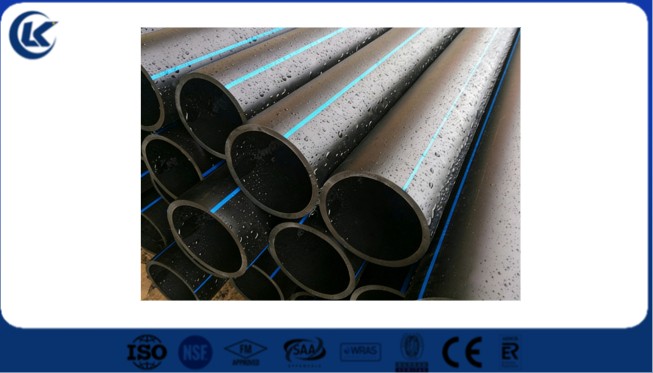
Product Core Advantages
Long Service Life: Manufactured to German standards with stable performance, offering up to 70 years of service, significantly reducing maintenance and replacement costs for oil and gas projects.
Excellent Corrosion Resistance: Made from chemically inert HDPE, highly resistant to oil, gas, and chemical corrosion, no additional anti-corrosion treatment required, ideal for harsh environments.
Leak-Free Safety: Hot-melt welding creates joints stronger than the pipe itself, ensuring zero leakage risk and safe, reliable oil and gas transport.
Strong Crack Resistance: Excellent resistance to rapid crack propagation (RCP), ensuring stable performance under high pressure and complex working conditions.
High Wear Resistance: Strong mechanical strength and abrasion resistance, suitable for demanding environments such as oilfields and construction sites.
High Transport Efficiency: Smooth inner wall and low friction reduce flow resistance, improving oil and gas transmission efficiency.
Easy Installation: Supports trenchless installation methods, lightweight and flexible, reducing construction time and cost.
Cost-Effective System: Low maintenance, low failure rate, and long service life significantly reduce total project cost.
Eco-Friendly: Recyclable HDPE material with no harmful residues, meeting global environmental standards.
Certified Quality: Fully compliant with international standards and certified for safe use in global oil and gas applications.
Market Overview
The global HDPE oil and gas pipeline market is experiencing steady growth driven by rising energy demand, expanding oilfield development, and increasing infrastructure investment. HDPE pipes are becoming a preferred solution due to their corrosion resistance, long service life, and cost efficiency, especially in emerging energy markets.
Key Industry Drivers
Rising Energy Demand: Expanding oil and gas exploration and infrastructure construction increases demand for HDPE pipelines.
Technological Advancement: Improved manufacturing processes and lower material costs enhance performance and affordability.
Environmental Regulations: Strong global focus on sustainability drives adoption of recyclable and low-impact HDPE materials.
Policy Impact
Government policies on energy security, infrastructure investment, and environmental protection significantly influence market growth. Supportive policies accelerate HDPE pipeline adoption, while stricter environmental regulations further strengthen demand for eco-friendly pipeline systems.
Applications
Henan Lukuang Industry HDPE oil transport pipe is widely used in oil and gas industry applications, including:
Oil & Gas Gathering Systems: Efficient collection and transport of crude oil and natural gas in oilfields.
Long-Distance Transmission: Safe, corrosion-resistant pipelines for long-distance oil and gas transport across complex terrains.
Injection & Drainage Systems: Suitable for water injection and oil drainage operations with stable pressure resistance.
Gas Storage Systems: Reliable pipeline solutions for gas storage and distribution infrastructure.
Emerging Markets: Widely used in oil and gas projects in Africa, the Middle East, and other developing energy regions.